
On May 8, 2025, Paradox Interactive revealed the real name of Project Caesar: Europa Universalis V. Which is something the community has suspected for the entire time of Caesar’s run, largely due to its start date of 1337 and the fact that EU4 is nearly twelve years old at this point. But what is Eupropa Universalis V going to be?
The big thing Paradox wants to announce is that EU5 is not EU4. Which has both benefits and disadvantages. Civilization VII is a game that made some huge changes, and many think it didn’t feel like a Civ game. Will this be the same for EU? One thing that is massively changed from Europa Universalis IV is the fact that your population is finite. You have pops that you need to handle, in groups, that do your work. People who have played Victoria III, or even Europa Universalis games before 4, are probably accustomed to this system. More people come form the same place it does in real life: food. If you have a lot of food, more people will be born. Which really feels like Europa Universalis V is actually going to be more than just a war game. Europa Universalis IV is definitely a grand strategy game, but to be a trader, or a colonizer, or anything else, you’ll have to go to war a lot. Which is accurate for the time, but it still feels like you’re just going to war while doing the other stuff on the side.
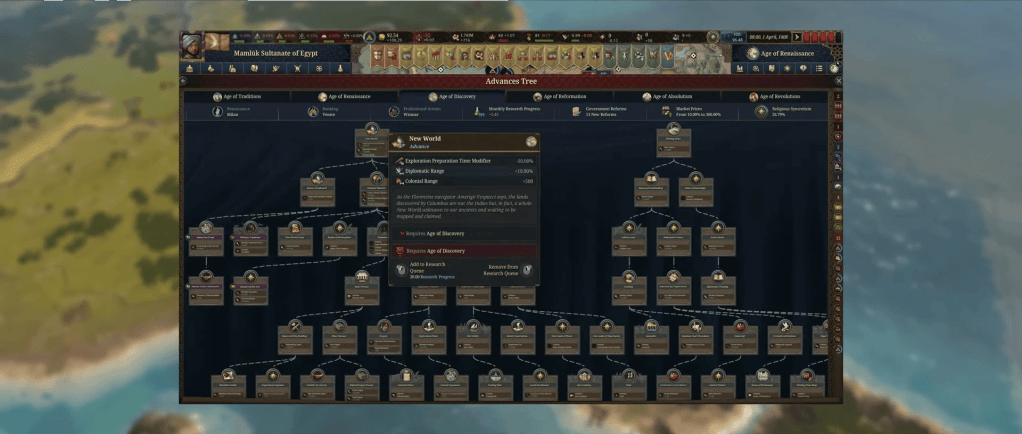
Something else in the game is the eras it goes through. Europa Universalis V starts in 1337 (no, not leet, that’s the start of the Hundred Years War) and ends in 1837. Throughout this half millennium, you’ll pass through six different Institutions. Unlike EU4‘s Institution system, which simply hinders you until you embrace a new one, embracing an Institution in EU5 will unlock a brand new technology tree. While traversing this tree, you can take multiple paths to do different things. For example, going down the New World branch in the Age of Discovery Institution will make it much easier to colonize. Going down a different path will still allow you to colonize, and any country can, but wanting to be a colonist is the easiest way to be a colonist. And this means that not wanting to be a colonist will make it much easier to do what you want to do.
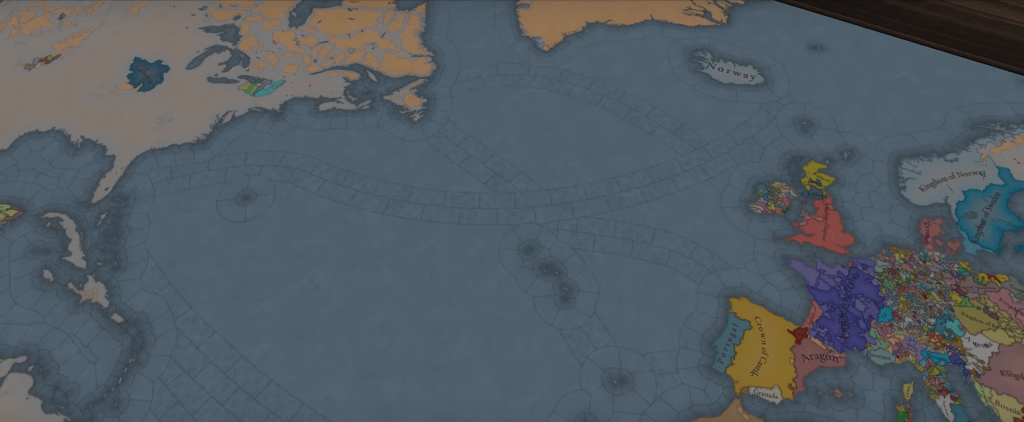
Now let’s talk a bit about resources and trade. Everything exists somewhere, which is a big change from Europa Universalis IV (and a similarity to Victoria III), where you just had stuff. Resources do exist individually in different parts of the land in EU4, but they’re basically only there for trade, you don’t actually need them. In EU5, if you don’t have a resource that you need within your market, you’ll need to trade with someone else for it. Not only that, but markets are fluid, and can grow, shrink, or even be destroyed. One of people’s biggest gripes with the trade system in EU4 is the fact that trade nodes–big areas where money flows into and out of–never change. If you create the world’s most powerful trade empire in China, you’re still going to have money flowing away from you and into the English Channel, when in reality it might be the other way around. This has some similarities to how the markets work in Victoria III, but instead of having access to only your market, or your parent country’s market, you can have access to more than one. Let’s say you’re England and have land in Scotland and Ireland, you’d have access to all three markets (if a broken up Ireland has a market that is (I don’t think Wales would have one either, sorry)).
Finally, let’s talk about war. One thing that’s changing is just how much land has an impact on your battles. In Europa Universalis IV, land does play an impact, but just raises or lowers a die roll that will decide how much of an army will die. EU5 however, land sounds like it has a much bigger impact on things like movement and battles size, similar to how it works in Hearts of Iron. Land is important in EU4, and there is reason to be somewhere good, but it sounds like in Europa Universalis V it will matter much more. Not only that, but your army is created from your pops. That means that when your army dies, your people will die, an especially big risk at the start of the game when you’re using levees. Dead soldiers can mean a dead market. Or your people not in the army can starve, because all your farmers are fighting, while your army is fed by supplies and feeding off the land they’ve conquered, whether it be food or military supplies.
Finally, religion and culture. There are hundreds of different faiths and culture in the world, and back to the pop system, each pop belongs to a different one. How you treat these people depends greatly on how you treat anyone in your land. Let’s say that you’re France, and you conquer an eastern part of Brittany. In Europa Universalis IV, these would not be your people. Catholic, sure, but not French. In EU5 however, there would probably be a large population of French people. Those of Brittany’s culture would not be happy to see you, but the French would. And it would be a lot easier to calm them down, especially if you treat them well, than if you conquered into Iberia.
We’re sure to learn more about Europa Universalis V as time goes by, but what do you think about it now? Will you get a copy? Do you think you’ll like it more or less than EU4? Tell us in the comments below, or on Facebook!
 novusgaming.net